UmpAI

Home / Case Studies / UmpAI

UmpAI

UmpAI brings LBW review to matches that were never going to afford a broadcast rig. A phone at the edge of the field reads each delivery, resolves the appeal on the handset, and has an answer ready inside the pause that follows the shout. Nothing is sent anywhere to make that happen.

Project Overview

Sector: Sports & AI


Industry context: Cricket officiating below the professional tier


Product: UmpAI, an umpiring assistant that runs on a single handset


Platform: Mobile, deployed globally


Build focus: On-device computer vision, live LBW adjudication, per-delivery replay


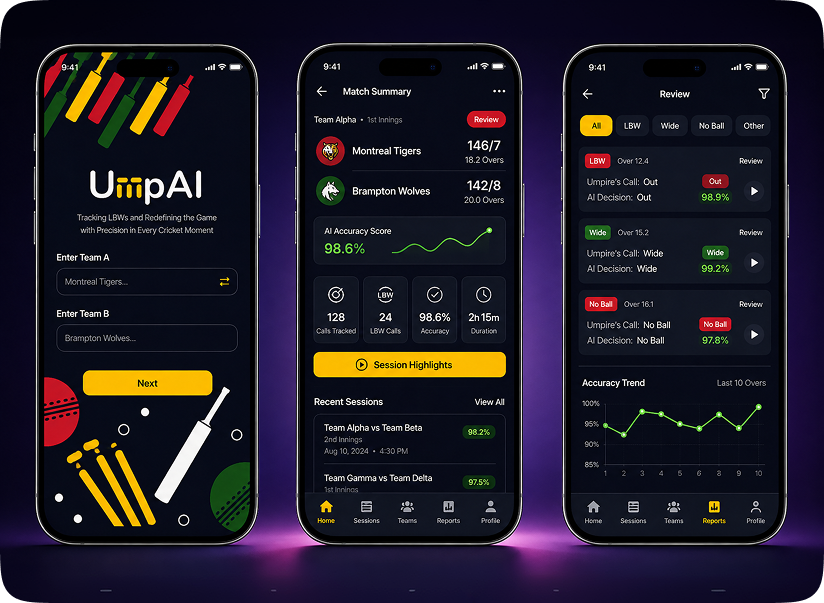
Elite cricket has had ball tracking for two decades. Club, academy, and school cricket have had nothing, because every existing system was designed around television budgets. UmpAI was built to close that gap using equipment these matches already own. The product spans an entire fixture, from naming the sides at the start through to shareable clips with the ball’s path drawn across them at the end.

Key Features

A Verdict on Every Appeal

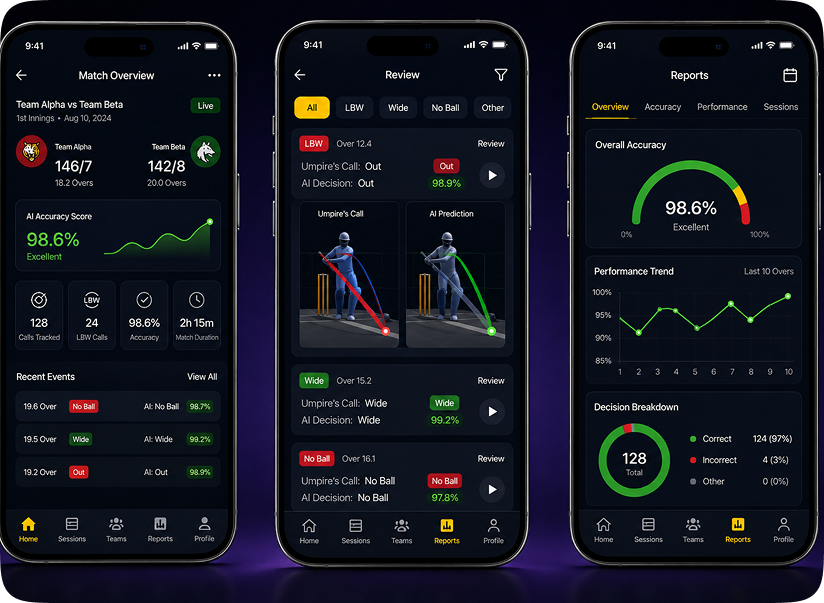
The model evaluates each delivery as it is bowled and produces an LBW ruling immediately. The gain is timing, because the answer arrives while the game is still waiting on it rather than as a footnote afterwards. 

Independent of Coverage

Processing, storage, and playback all sit on the handset. The gain is reach, since the app performs identically at a ground with no signal and adds nothing to a club’s running costs.

The Path, Drawn & Kept

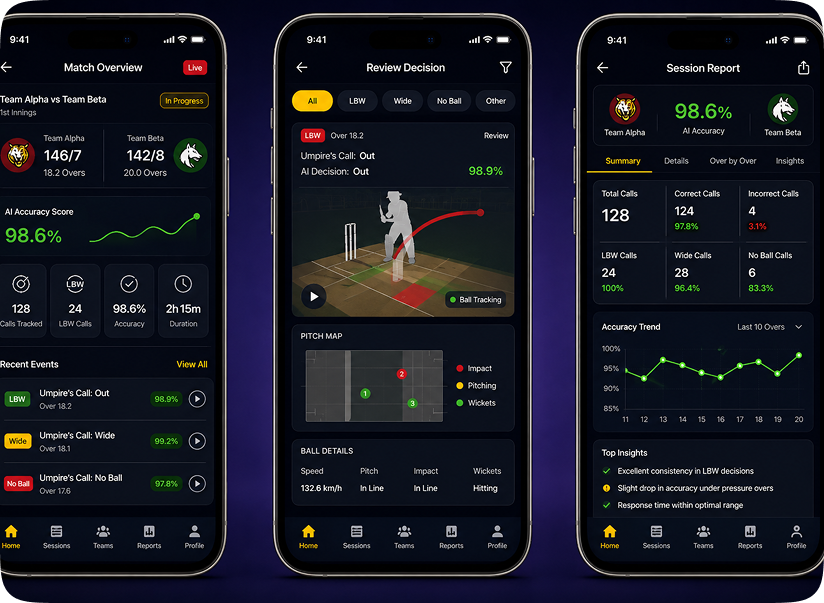
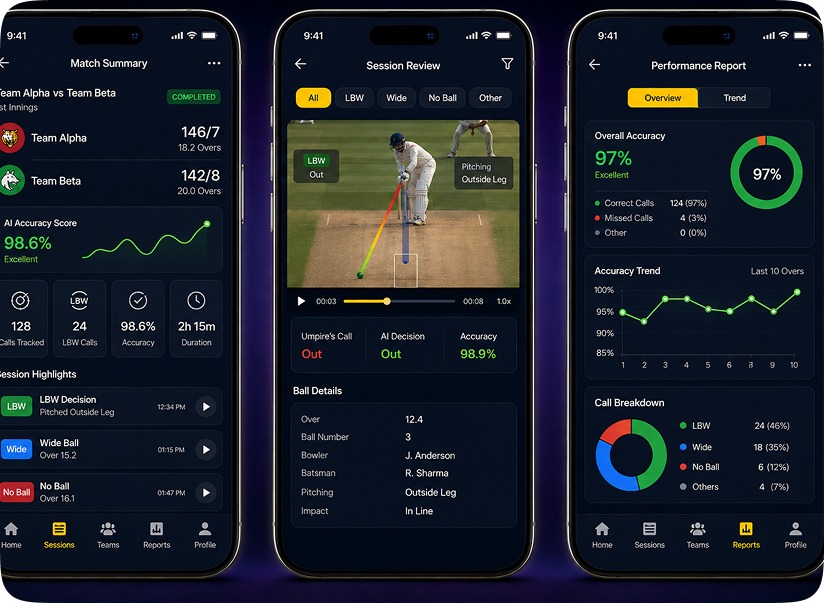
Every appeal is retained as footage with the ball’s reconstructed line rendered across it, plus pitch mapping and delivery measurements. The gain is proof, which turns a disputed shout into something two people can look at together.

Inside the Product

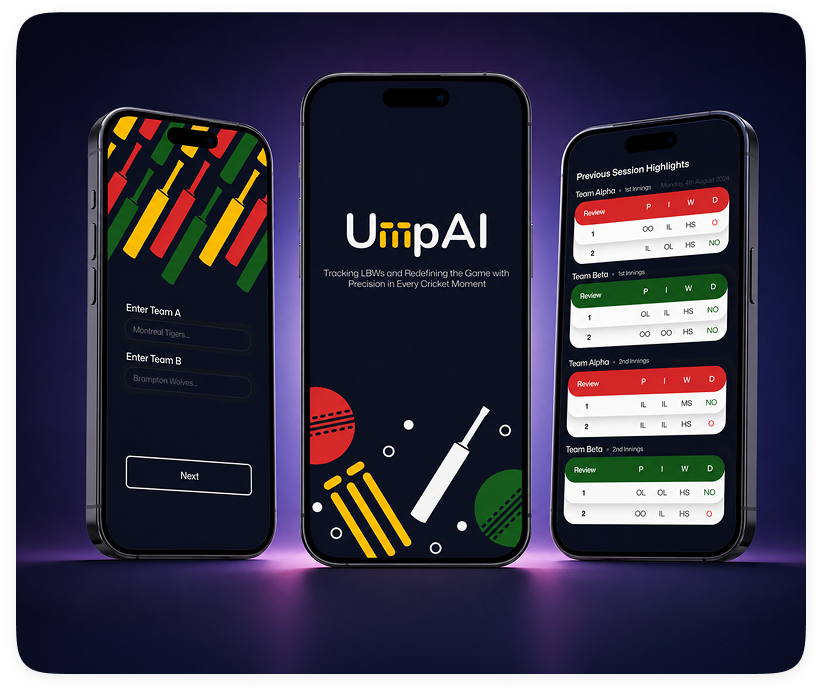
Setup through to session report, without a second device. Preparation is short. Name the two sides, add the fixture detail, and calibrate against the pitch with one tap. While play is under way, the match view holds the live score beside a running column of decisions, each one openable as footage. Opening any call reveals the reconstruction: the tracked path, the pitch map, and the delivery’s measurements covering speed, where it landed, where it struck, and the verdict on the stumps. Once the innings closes, the session report gathers every ruling made, breaks them down by appeal type, and assembles the passages worth watching back with a coach.
Bring Us the Brief Everyone Else Called Impossible

Tight constraints are the part worth having. No bandwidth, no infrastructure budget, and a ruling needed inside a second is exactly the kind of problem this studio takes on.


Scoping happens in days. Working software follows in months. A senior engineer owns the architecture from the first conversation through to release.