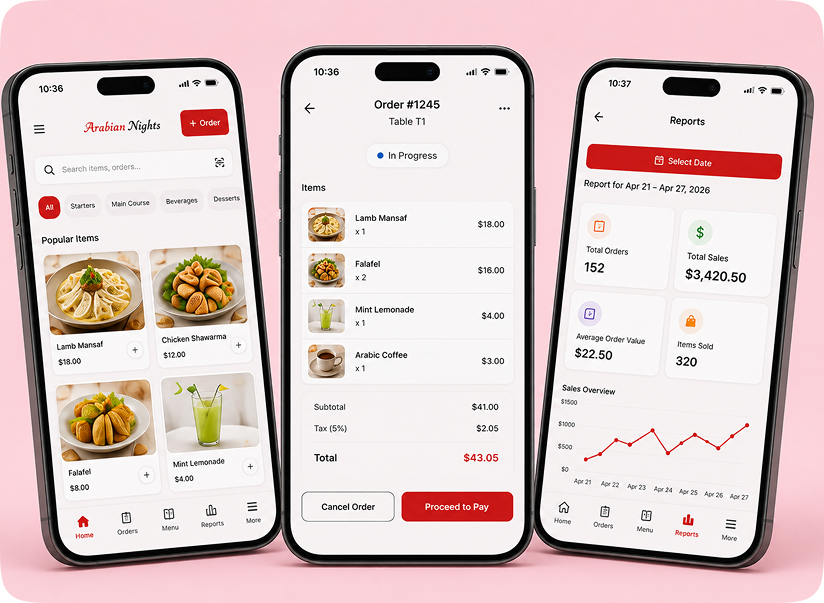
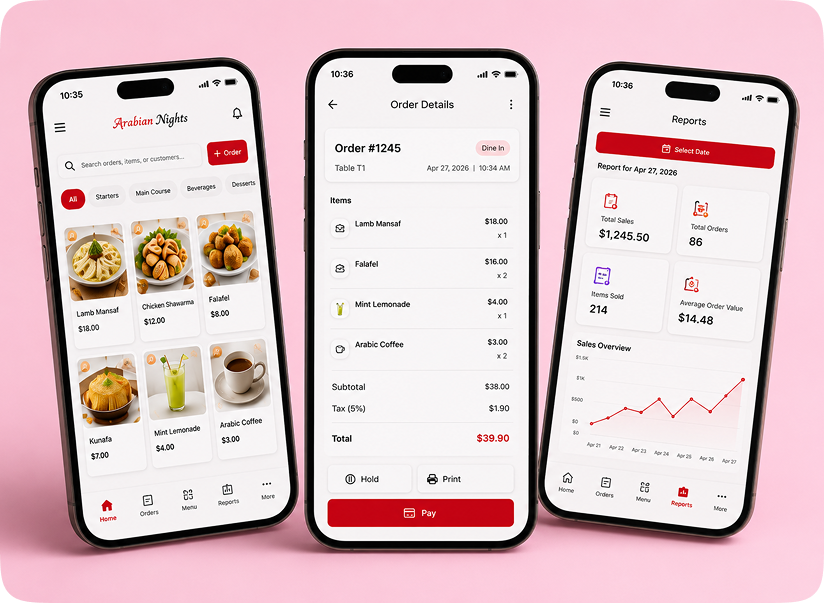
Arabian Nights POS keeps the till, the back office, the floor staff, and the kitchen working from one shared record. Because those four surfaces read the same data instead of trading updates between themselves, closing time no longer involves rebuilding the day from four partial accounts. Running in Norwegian venues, compliant with national reporting law since its first release.
Project: Arabian Nights POS · Hospitality, multi-surface
Industry context: Café, restaurant, & hotel service
Product: Arabian Nights POS, a point of sale spanning counter, office, floor, & pass
Market: Norway
Build focus: SwiftUI clients, .NET services, web application, live synchronisation, Norwegian fiskal reporting
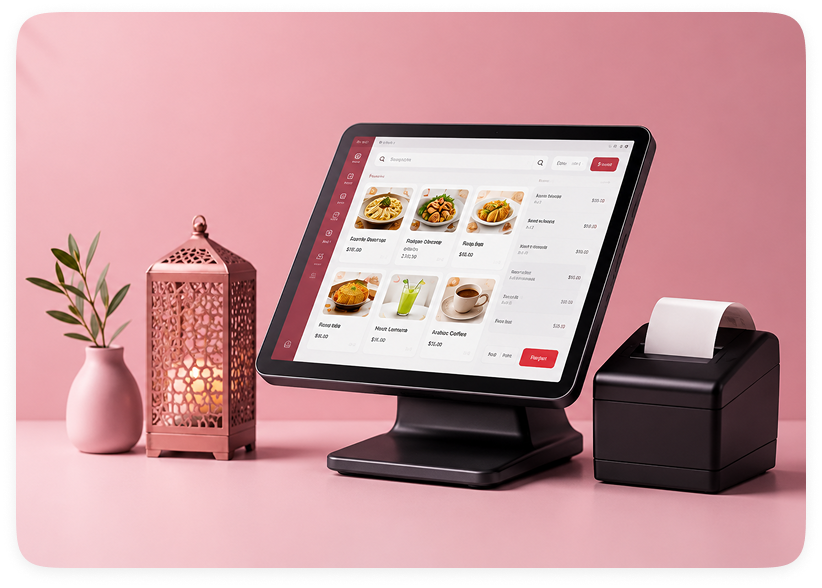
A busy café is four workstations pretending to be one business. Someone takes payment at the counter, someone takes orders on the floor, someone cooks to a screen at the pass, and someone reads the numbers in an office. Arabian Nights POS was built so those four roles operate against a single live record rather than four copies that drift apart over the course of a shift.
Key Features
Orders That Arrive Where They Are Needed
A ticket taken on the floor appears at the pass without anyone carrying it, and a plate marked ready at the pass is visible to the floor immediately. The gain is service pace, because staff stop walking between stations to ask questions the screen could answer.
A Manager's View That Is Already Current
Takings so far, the items selling fastest, and who is currently on shift are all readable at any moment. The gain is timeliness, since a decision about staffing or stock can be made during the day it affects rather than the morning after.
Reporting That Satisfies the Law by Default
Norwegian fiskal obligations sit inside how each sale is recorded rather than in a reporting step bolted on afterwards. The gain is certainty, because compliance is a property of the system rather than a task somebody has to remember.
Inside the Product
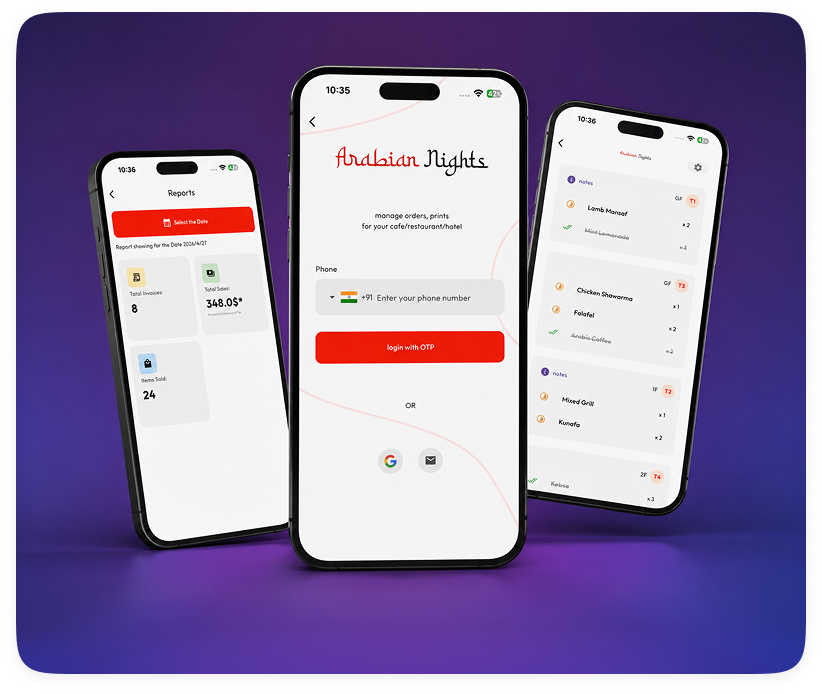
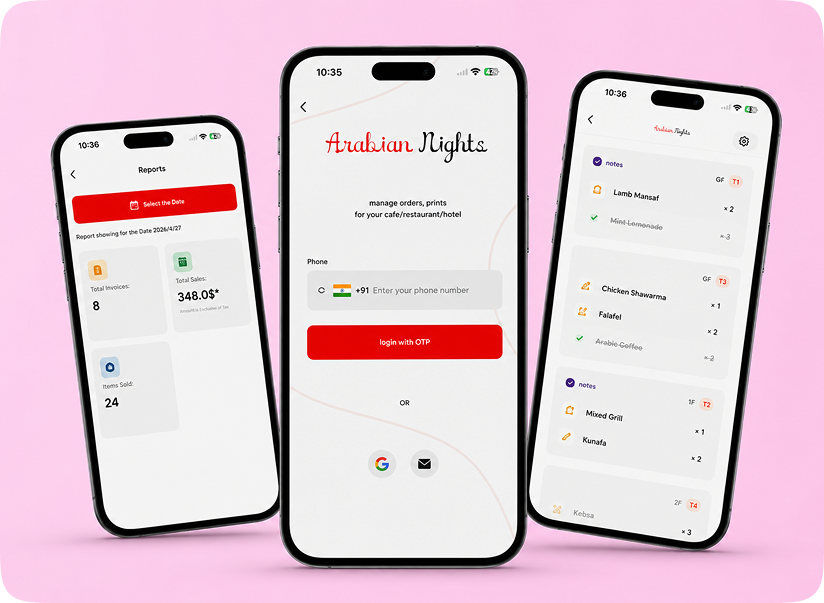
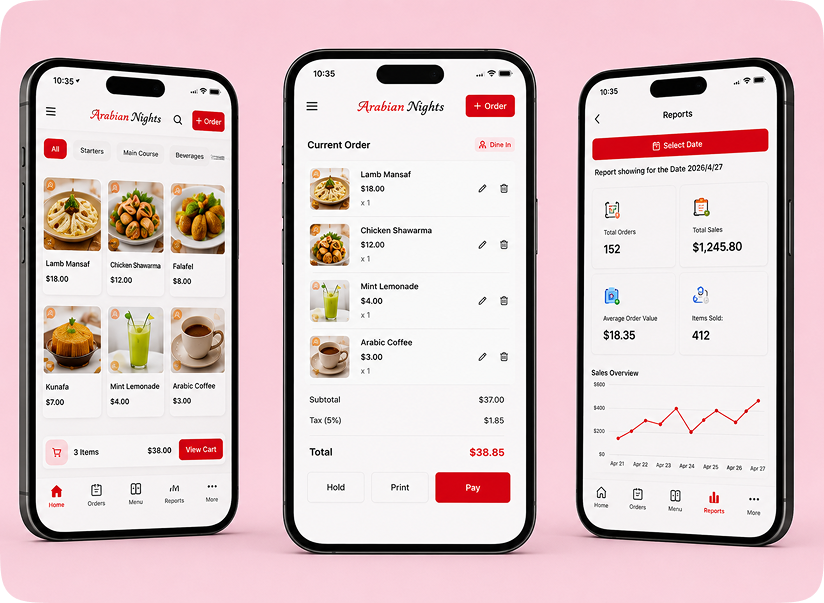
Sign in, take the order, read the day. Access starts at a phone number with a one-time code, alongside sign-in through Google or email, which suits floor staff who change often and should not be sharing a password. The menu is organised by category with prices attached, so an order can be taken at the table by someone who started the job this week. The reporting view takes a date range and returns the takings and the covers for that period, giving a manager the same numbers mid-service or across a full month.
Make Every Screen Agree
Regulated markets and four-screen workflows are the sort of constraint worth taking seriously from the first sketch rather than the first audit.
Scoping happens in days. Working software follows in months. A senior engineer owns the architecture from the first conversation through to release.